


FACULTY OF ARCHITECTURE - FACULTY OF ARCHITECTURE - SCHOOL OF DESIGN - FACULTY OF CHEMICAL ENGINEERING AND TECHNOLOGY - FACULTY OF CIVIL ENGINEERING - FACULTY OF ELECTRICAL ENGINEERING AND COMPUTING - FACULTY OF GEODESY - FACULTY OF GEOTECHNICAL ENGINEERING (VARAŽDIN) - FACULTY OF GRAPHIC ARTS - FACULTY OF MECHANICAL ENGINEERING AND NAVAL ARCHITECTURE - FACULTY OF METALLURGY (SISAK) - FACULTY OF MINIG, GEOLOGY AND PETROLEUM ENGINEERING - FACULTY OF TEXTILE TECHNOLOGY - FACULTY OF TRANSPORT AND TRAFFIC SCIENCES
FACULTY OF ARCHITECTURE
http://www.arhitekt.hr/
Faculty of Architecture
Fra Andrije Kačića Miošića 26
HR-10000 Zagreb, Croatia
 Phone: +385 1 46 39 222
Fax: +385 1 48 28 079
E-mail: info@arhitekt.hr
DEPARTMENTS: 4
CHAIRS: 27
TEACHING STAFF: 101
NON-TEACHING STAFF: 30
STUDENTS: 708
E-mail: luka.korlaet@arhitekt.hr
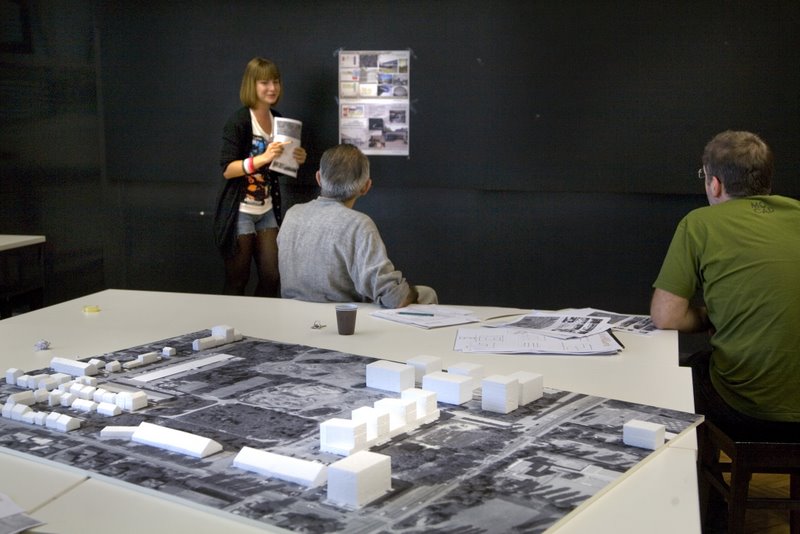
The Faculty of Architecture is the only institution of higher education in Croatia combining instruction and research in the fields of architecture and urban design. The Faculty nourishes the scope and tradition of engineering skills and knowledge, complemented by artistic principles and activities as an inherent feature of the architectural design process. Its curriculum is comparable to the curricula of most schools of architecture at European universities and to a large extent to those at universities of both North and South America. The undergraduate programme is based on a balance of lectures and studios. The programme is enriched and complemented by site surveying and visits to towns in Istria as well as architectural summer schools in Motovun, Bol and Unije. The summer school in Motovun has an international flavour and has been a part of the programme for more than 20 years. Field trips are a particular form of the instruction in the first four years of study. Students, guided by their teachers, visit Croatian regions and are acquainted with historical and contemporary urban design and architectural achievements.
The primary objective of the programme is to prepare students for professional careers in highly complex and demanding fields of contemporary architecture and urban planning and to assist them in developing a high level of excellence and intelligence required by young professionals these days. The Faculty nourishes the scope and tradition of engineering knowledge and skills complemented by artistic principles and reflection as inherent features of the architectural design process. Students are directed towards a realistic, problem-solving approach but within a broader cultural and social framework.
Students are offered a balance of theoretical knowledge and practical skills needed by numerous and varied disciplines and are permanently encouraged to develop their intellect and creativity. They are introduced to basic principles and methods of scientific research and stimulated to learn through their own creative efforts in architectural design and urban planning. Research is based on integral understanding of inventive and pragmatic demands which constitute architectural and urban planning issues.
There has always been a great interest for architectural study due to a broad range of jobs in the fields of architecture and urban planning. Also, this interest is motivated by architecture’s social and cultural relevance. Employment prospects are excellent both in private and public sectors and as independent free-lance practices. A great number of public and economic institutions show considerable interest in this type of university study as well: government institutions, ministries, towns, counties and professional chambers.
Research is based on integral understanding of both inventive and pragmatic demands which constitute architectural design and urban planning. The approach to project development is based on comprehensive analyses of functional, technical, programmatic and contextual aspects of architectural typologies and different scales of urban planning in order to respond to society’s needs. Research is directed towards a realistic, problem-solving approach within a broader cultural and social framework. Research studies include history of art and architecture, contemporary architectural theories, sustainability matters, means of architectural representation and recent investigations in architectural and urban design.
|
BACHELOR’S STUDY PROGRAMME |
DURATION(semesters) |
ECTS |
LANGUAGUE OF INSTRUCTION |
|
Architecture and Urban Design
|
6
|
180
|
Croatian
|
| Industrial Design | 6 | 180 | Croatian |
| Visual Communication Design | 6 | 180 | Croatian |
|
MASTER’S STUDY PROGRAMME |
DURATION(semesters) |
ECTS |
LANGUAGUE OF INSTRUCTION |
|
Architecture and Urban Design
|
4
|
120
|
Croatian
|
| Industrial Design | 4 | 120 | Croatian |
| Visual Communication Design | 4 | 120 | Croatian |
|
DOCTORAL STUDY PROGRAMMES
|
DURATION
(semesters)
|
ECTS
|
LANGUAGE OF INSTRUCTION
|
|
Architecture and Urban Design
|
6 |
180
|
Croatian
|
|
STUDY COURSES IN ENGLISH |
SEMESTER Winter / Summer |
ECTS |
STUDY LEVEL BSc / MSc |
| 1. YEAR | |||
| Physical Planning | S | 2 | MSc |
| Croatian space and architecture - Dalmatia | S | 2 | MSc |
| Contemporary housing | S | 2 | MSc |
| Workshop in Architecural Design –Contemporary Housing | S | 12 | MSc |
| Sports and Recreation Facilities | S | 2 | MSc |
| Workshop in Architectural Design 2 - Sport+ | S | 12 | MSc |
| Sustainable Construction 1 | S | 2 | MSc |
| Urban Planning Workshop - Town Transformation | S | 6 | MSc |
| Elective course | S | 1ECTSX2 | MSc |
| Theory of Architecture I | W | 2 | MSc |
| History of European Urban Planning | W | 2 | MSc |
| Sports and Recreation Facilities | W | 2 | MSc |
| Workshop in Architectural Design 2 - Sport+ | W | 12 | MSc |
| Contemporary Housing | W | 2 | MSc |
| Workshop in Architecural Design –Contemporary Housing | W | 12 | MSc |
| Sustainable Construction 2 | W | 2 | MSc |
| Urban Planning Workshop - Settlement Planning | W | 6 | MSc |
| Elective course | W | 1ECTSx4 | MSc |
| 2. YEAR | |||
| Theory of Architecture II | W/S | 3 | MSc |
| Interior Workshop | W/S | 2 | MSc |
| Workshop in Architecural Design 3 | W/S | 16 | MSc |
| Workshop for Architectural Structures | W/S | 16 | MSc |
| Workshop in Building Heritage | W/S | 16 | MSc |
| Urban Planning Workshop | W/S | 16 | MSc |
| Physical Planning Workshop | W/S | 16 | MSc |
| Landscape Architecture Workshop | W/S | 16 | MSc |
| Health and Tourism – Buildings for Temporary stay | W/S | 1,5 | MSc |
| Buildings for Business and Cultural | W/S | 1,5 | MSc |
| Urban Aspects of Traffic | W/S | 1,5 | MSc |
| Elective course | W/S | 1ECTSx2/1ECTSx3/1,5ECTSx2 | MSc |
| GRADUATE WORKSHOP | W/S | 30 | MSc |
| ELECTIVE COURSE | |||
| History of making American cities by the end of 19th century | S | 1 | MSc |
| Drawing and Architectural Graphics | S | 1 | MSc |
| English Language for Architects III | S | 1 | MSc |
| Building Heritage II | S | 1 | MSc |
| Industrial Archaeology | S | 1 | MSc |
| Methods and Practice of Supporting Structures in Architecture | S | 1 | MSc |
| Architectonic of Light | S | 1 | MSc |
| Mathematical Structures | S | 1 | MSc |
| Author’s Attitude of Croatian Architecture | W | 1 | MSc |
| English Language for Architects IV | W | 1 | MSc |
| Summer School: Tradition and Modernity - Brač | W | 1 | MSc |
| Motovun – Summer School: Tradition, Creativity and Sustainability - Motovun | W | 1 | MSc |
| Geometry in Construction | W | 1 | MSc |
| Computer - Aided Urban and Physical Planning | W | 1 | MSc |
| Contemporary Landscape Architecture | W | 1,5 | MSc |
| Materials and Equipment in Interior Design | W | 1,5 | MSc |
| Tourism in Urban and Physical Planning | W | 1,5 | MSc |
| Urban Aspects of Traffic | W | 1,5 | MSc |
| High Technology Architecture | W | 1 | MSc |
FACULTY OF ARCHITECTURE - SCHOOL OF DESIGN
Frankopanska 12
HR-10000 Zagreb, Croatia
http://www.studijdizajna.com/
FACTS & FIGURES
DEPARTMENTS: Industrial design and Visual Communication
CHAIRS: 1
TEACHING STAFF: 64
NON-TEACHING STAFF: 6
STUDENTS: 159
INTERNATIONAL RELATIONS/ ECTS-COORDINATOR
Ms Ivana Fabrio, mag.
E-mail: iva@ivanafabrio.net
INSTITUTIONAL PROFILE
Study of Design is organised as an interdisciplinary study at the Faculty of Architecture. Its educational programme is realized in co-operation with the Faculty of Architecture, Mechanical Engineering, Forestry, Economy, Humanities and Social Sciences and the Academy of Fine Arts.
This education is performed today through the courses at the university studies, through research, highly professional and artistic work in the field of design. The studies have inherited the best traditions of theoretical thought, methodology and design principles that have prevailed in the Croatian cultural and academic context.
The purpose of the studies is to prepare designers for creative, informed and responsible work on creating object-related and symbolical level of human environment in actual terms of social community transition and global exchange of ideas, technologies and work .The School is a member of ICSID (International Council of the Societies of Industrial Design) and ICOGRADA (International Council of the Associations of Graphic Designers).
PROGRAMME EMPHASIS
The School of Design (http://www.studijdizajna.com/) offers educational programmes at two major departments: Industrial Design and Visual Communications Design on two levels, Bachelor and Master.
Teaching activity is focused on helping the students gain experience in theoretical and methodical knowledge and skills, as well as in projects and professional practice. For that purpose the programme is divided into theoretical and practical courses.
Bachelor programme emphasizes education in fundamental design skills and techniques (drawing and modeling, spatial structures, information structures, theoretical and methodical introduction into design, basic typographies, technological information courses, and exact tools of mathematics and descriptive geometry), whereas the Master programme provides training in scientific research work and specialization within profession, as well as fostering the ability to cope with the context of real environment, making the candidates capable to run projects independently and to manage the processes of design development.
CAREER PROSPECTS
Professional designers can practice their profession as employees in various industry and marketing or design agencies, architectural and design studios, multimedia centers, educational institutions, non-governmental organizations, as well as free-lance designers in the field of visual communication, product design, interior design, movie/theatre set design, experience design and other areas that can benefit from design thinking.
As Bachelors of Design designers acquire competences for independent realization of simple tasks in designing objects and visual communications, collaboration in development and research works and projects, collaboration in specialist research, collaboration in interdisciplinary development, research, scientific and artistic teams.
As Masters of Design, professional designers acquire competences for creative work in upgrading the development of object design and visual communications, independent research in the field of the development of object design and visual communications, managing strategies and processing of the development of design, and in education.
RESEARCH ORIENTATION
Integration of artistic and scientific research methodologies is evident throughout the whole studies, from Bachelors to Masters.
The main research fields of the Study of Design cover development of analytical skills and critical thinking, , studying human needs, materials and technological processes, evolving communication systems, the role of design in economy, culture, society and its importance in forming the cultural identity.
Through applied scientific research of all phenomena relevant for mastering important design skills students are encouraged to creative development and critical thinking. Interdisciplinary integration of arts and science will remain in focus of the School, because it is our obligation to question and improve models of education in the context of contemporary world contradictions.
|
BACHELOR’S STUDY PROGRAMME |
DURATION(semesters) |
ECTS |
LANGUAGUE OF INSTRUCTION |
|
Industrial Design
|
6
|
180
|
Croatian
|
| Visual Communications Design | 6 | 180 |
Croatian
|
GRADUATE STUDY PROGRAMMES
|
MASTER'S STUDY PROGRAMME |
DURATION(semesters) |
ECTS |
LANGUAGUE OF INSTRUCTION |
|
Industrial Design
|
6
|
180
|
Croatian
|
| Visual Communications Design | 6 | 180 |
Croatian
|
FACULTY OF CHEMICAL ENGINEERING AND TECHNOLOGY
http://www.fkit.hr/
University of Zagreb
Faculty of Chemical Engineering and Technology
Marulićev trg 19
HR-10000 Zagreb, Croatia
Phone: + 385 1 45 97 281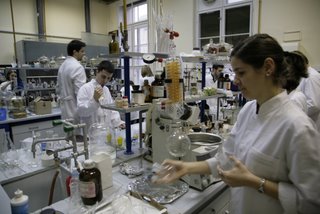
Fax: +385 1 45 97 260
E-mail: office@pierre.fkit.hr
FACTS & FIGURES
DEPARTMENTS: 16
CHAIR: 1
TEACHING STAFF: 143
NON-TEACHING STAFF: 62
STUDENTS: 1149
INTERNATIONAL RELATIONS
Professor Silvana Raić Malić, PhD
E-mail: sraic@fkit.hr
ECTS-COORDINATOR
Professor Irena Škorić, PhD
E-mail: iskoric@fkit.hr
INSTITUTIONAL PROFILE
The Faculty of Chemical Engineering and Technology was founded in 1919, as the first Department of Chemical Engineering in Croatia – a part of the Technical Institute Zagreb, with the aim of carrying out scientific research and educating young scientists and engineers in the field of chemistry and chemical engineering. Today it is organized in 16 departments that perform teaching, scientific work, professional and consulting activities in Chemical Engineering, Chemistry, and related fields. The Faculty has a large central library with about 22,000 titles of books, monographs, etc., and subscribes to about 400 titles of foreign and domestic scientific journals. The Faculty has developed valuable international cooperation with various scientific institutions in the world, either directly or through inter-university cooperation.
PROGRAMME EMPHASIS
The Faculty of Chemical Engineering offers 4 study programmes, 3 of them are in the field of technical sciences (Chemical Engineering, Eco-engineering and Material Science and Engineering) and one is in the field of natural sciences (Applied Chemistry). Studies are organized in three educational cycles: undergraduate studies (BSc), graduate studies (MSc), and the postgraduate studies (PhD) in Chemical Engineering and Engineering Chemistry. Students can also enrol in the postgraduate specialist studies of Eco-engineering and Corrosion and Protection.
Teaching and education are based on modern, problem-oriented methods and provide students with analytical methodology in solving problems, but always keeping in mind the synthetic approach. Students of the Faculty gather contemporary knowledge of research, development and design of new, sustainable chemical industrial processes as well as on the improvement of existing ones. This is done to ensure high quality, reliable and safe production that takes into account criteria of the economy, efficiency and environmental protection. In addition, students of the Faculty may specialize in drug design and development of new polymeric and inorganic materials, development of novel synthesis routes as a basis for new processes, as well as in the quality management.
CAREER PROSPECTS
The job prospectus and career options after finishing one of the selected study programmes at the Faculty are very different. The work area varies from petroleum and petrochemicals to food, materials, specialty chemicals, plastics, power production, environmental control, waste management, and biotechnology. Graduates can seek jobs in areas such as processing, operations or manufacturing, research and development, design and construction, finance and teaching. In process industries graduates work in positions such as a supervisor or manager, technical specialist, project manager or project engineers. Other work areas include food processing, explosives manufacturing, chemical process industries such as fertiliser industry, including pesticides and herbicides, glass and specialty chemicals, dyes and dyestuff, paint, lubricants, steel and aluminium production. Graduates are also employed in a variety of manufacturing industries other than chemical manufacturing, such as those producing electronics, pulp and paper, etc.
RESEARCH ORIENTATION
The priority topics of research at the Faculty of Chemical Engineering and Technology are: environmental protection and management, development of advanced materials and sustainable technologies, alternative and renewable energy sources, development of new pharmaceuticals, industrial bio-transformations and other related subjects.
|
BACHELOR’S STUDY PROGRAMMES |
DURATION(semesters) |
ECTS |
LANGUAGUE OF INSTRUCTION |
|
Chemical Engineering
|
6
|
180
|
Croatian
|
| Applied Chemistry | 6 | 180 | Croatian |
|
Ecoengineering
|
6 | 180 | Croatian |
| Material Science and Engineering | 6 | 180 | Croatian |
|
MASTER’S STUDY PROGRAMMES |
DURATION(semesters) |
ECTS |
LANGUAGUE OF INSTRUCTION |
|
Chemical Engineering
|
4
|
120
|
Croatian
|
| Applied Chemistry | 4 | 120 | Croatian |
|
Ecoengineering
|
4 | 120 | Croatian |
| Material Science and Engineering | 4 | 120 | Croatian |
|
DOCTORAL STUDY PROGRAMMES
|
DURATION
(semesters)
|
ECTS
|
LANGUAGE OF INSTRUCTION
|
|
Chemical Engineering
|
6 |
180
|
Croatian
|
| Engineering Chemistry | 6 |
180
|
Croatian
|
STUDY COURSES IN ENGLISH
|
COURSE TITLE |
SEMESTER Winter / Summer |
ECTS |
STUDY LEVEL BSc / MSc |
| Analytical Chemistry | S | 5 | BSc |
|
Chemometrics
|
W |
5
|
BSc
|
|
Chemical Engineering
Thermodynamics
|
W |
7
|
BSc
|
|
Organic Chemistry
|
W |
5
|
BSc
|
| Molecular Spectroscopy | S |
5
|
BSc
|
| Introduction to Nanotechnology | S |
4
|
BSc
|
|
Mass and Energy Balances
|
S |
7
|
BSc
|
| Analysis and Modeling of Environmental Processes | S | 7 |
BSc
|
| Integrated Chemical Systems | S | 6 |
BSc
|
| Surface Engineering | W | 7 | BSc |
| Biseparation Processes | S | 5 | BSc |
| Formulation Engineering | W | 5 | BSc |
| Adhesion and Adhesive Products | W | 4 | BSc |
FACULTY OF CIVIL ENGINEERING
http://info.grad.hr/
University of Zagreb
Faculty of Civil Engineering
Fra Andrije Kačića Miošića 26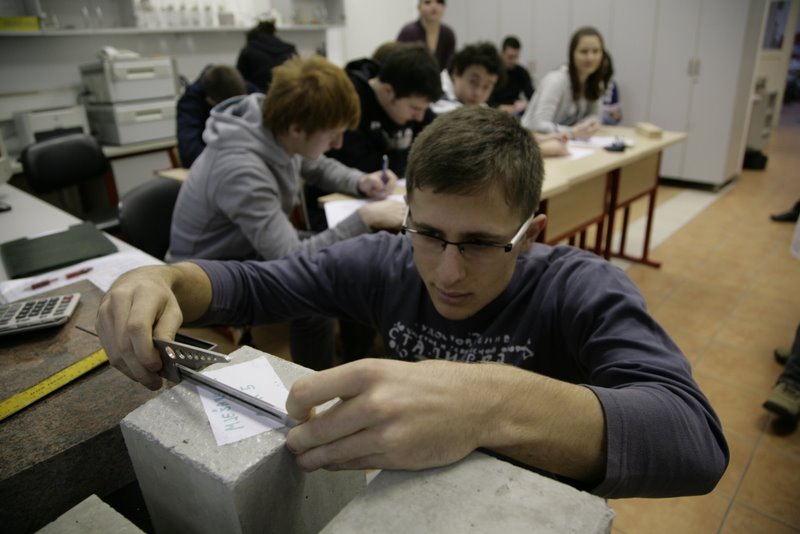
HR-10000 Zagreb, Croatia
Phone: +385 1 46 39 255
Fax: +385 1 46 39 206
E-mail: ured_dekana@grad.hr
FACTS & FIGURES
DEPARTMENTS: 10
CHAIRS: 10
TEACHING STAFF: 113
NON-TEACHING STAFF: 55
STUDENTS: 1063
E-mail: anita@grad.hr
The Faculty of Engineering is the oldest and the leading civil engineering faculty in Croatia, with more than 976 undergraduates and 87 graduates. The lectures started in the autumn of 1919. Since then the Technical College has continually been developing and adapting to the progress in technology and construction. In 1926 the Technical College became Technical Faculty of the University of Zagreb.
The Bachelor's study programme is three-year university undergraduate study of civil engineering with 180 ECTS credits leading to the professional degree Bachelor of Science in Civil Engineering. The aim of the Bachelor's study programme is, firstly, to acquire a good knowledge and a strong foundation in Mathematics, Physics, and Geometry, and it aims at gaining the basic civil engineering knowledge such as Mechanics, Strength of Material, and Structural Analysis.
The Master's study programme is two-year university graduate study of civil engineering with 120 ECTS credits leading to the professional degree Master of Science in Civil Engineering. Students enlarge on their civil engineering knowledge in one of the following career-oriented studies: geotechnics, construction materials, hydraulic engineering, structural engineering, construction management, transportation engineering, and theory and modelling of structures.
Civil engineers apply acquired skills and knowledge in designing, building, inspection, and maintenance of intricate structures, undertakings, and systems in their specialised field. They must then take into account stability, safety, usage, environmental protection and costs. They recognise, formulate, and analyse the problems and find acceptable solutions in their specialised field.
RESEARCH ORIENTATION
The study involves development and scientific research in Geotechnics, Construction Materials, Hydraulic Engineering, Engineering Structures, Construction Management, Transportation Engineering, and Mechanics of Materials.
|
BACHELOR’S STUDY PROGRAMMES |
DURATION(semesters) |
ECTS |
LANGUAGUE OF INSTRUCTION |
|
Civil Engineering
|
6
|
180
|
Croatian
|
|
MASTER’S STUDY PROGRAMMES |
DURATION(semesters) |
ECTS |
LANGUAGUE OF INSTRUCTION |
| Civil Engineering | 4 | 120 |
Croatian
|
| Geotechnical Engineering | 4 | 120 |
Croatian
|
| Hydraulic Engineering | 4 | 120 |
Croatian
|
| Structural Engineering | 4 | 120 |
Croatian
|
| Construction Materials | 4 | 120 |
Croatian
|
| Construction Management | 4 | 120 |
Croatian
|
| Transportation Engineering | 4 | 120 |
Croatian
|
|
Theory and Modelling of Structures
|
4
|
120
|
Croatian
|
|
DOCTORAL STUDY PROGRAMMES
|
DURATION
(semesters)
|
ECTS
|
LANGUAGE OF INSTRUCTION
|
|
Civil Engineering
|
6 |
180
|
Croatian
|
FACULTY OF ELECTRICAL ENGINEERING AND COMPUTING
http://www.fer.hr/
Faculty of Electrical Engineering and Computing
Unska 3
HR-10000 Zagreb, Croatia
Phone: + 385 1 61 29 999
Fax: + 385 1 61 70 007
E-mail: fer@fer.hr
FACTS & FIGURES
DEPARTMENTS: 12
TEACHING STAFF: 313 311
NON-Teaching STAFF: 189 192
STUDENTS: 5023
INTERNATIONAL RELATIONS
E-mail: jasna.matijevic@fer.hr
ELECTRICAL ENGINEERING AND INFORMATION TECHNOLOGY
Assoc. Prof. Igor Lacković, Ph.D.
E-mail: igor.lackovic@fer.hr
Assistant Tomislav Grgić
E-mail: tomislav.grgic@fer.hr
Assist. Prof. Vedran Podobnik, Ph.D.
E-mail: vedran.podobnik@fer.hr
The Faculty of Electrical Engineering and Computing was founded in 1956 (under the name of Faculty of Electrical Engineering). Due to the efficiency and improvement of educational and research activities, the Faculty is divided into 12 departments.
The Faculty buildings occupies 43,308 square meters and include lecture halls, seminar rooms, laboratories, offices, a congress centre, a teleconferencing room for distance education, a computing centre, a library, a restaurant, and sports and recreation facilities.
Determined to remain a respectable research institution, the Faculty undertakes scientific research at the highest level(s) of international standing. The Faculty has developed valuable international cooperation with many research institutions around the world, either directly or through inter-university cooperation.
As an endorsement of the teaching and research excellence, The Faculty has obtained the accreditation for the bachelor’s and master’s study programme from the ASIIN – Accreditation Agency for Degree Programmes in Engineering.
The Faculty has two first cycle study programmes: Electrical Engineering and Information Technology, and Computing. All study programmes are taught according to the prerequisite system.
The first year of study is common to both study programmes. In the second year students broaden their knowledge in mathematics and electrical engineering or computing, but also are introduced to quality management and principles of economy. In the third year, slight specializations are introduced by corresponding mandatory and elective courses, which give practical knowledge for students.
The second cycle study programmes are as follows: Electrical engineering and information technology, Information and communication technology, and Computing.
The common objectives of the three second cycle study programmes are to educate students for a broad range of professional careers and provide the basis for life-long learning. Recognizing the changing professional environment that students will encounter, the programmes aim to develop engineers who are able to link science and engineering principles to identify, formulate and solve complex engineering problems in professional practice and research and development contexts.
Upon finishing bachelor’s study, students are qualified for design, implementation, and commissioning of the less complex systems in the fields of control engineering and automatization, electrical power engineering, electronics, wireless technologies, computer engineering, software engineering, telecommunications and informatics, computer science, information processing, and multimedia systems.
Second cycle study programmes enable students to acquire the competencies to solve difficult engineering problems in aforementioned fields, to design complex systems, to act as leaders of a team and to conduct research and development.
The Faculty is organized in 12 departments which are the cores of educational, research, and scientific work in particular fields and branches. This work is carried out through projects in the fields of applied physics and mathematics and in the fields of electrical engineering and computing. The projects are promoted and funded by the Croatian government and nongovernment organizations, but the Faculty has also developed valuable international co-operation with world-leading scientific institutions and universities.
|
BACHELOR’S STUDY PROGRAMMES |
DURATION(semesters) |
ECTS |
LANGUAGUE OF INSTRUCTION |
| Electrical Engineering and Information Technology | 6 | 180 |
Croatian
|
|
Computing
|
6
|
180
|
Croatian
|
|
MASTER’S STUDY PROGRAMMES |
DURATION(semesters) |
ECTS |
LANGUAGUE OF INSTRUCTION |
| Electrical Engineering and Information Technology | 4 | 120 |
Croatian
|
|
Information and Communication Technology
|
4 | 120 |
Croatian
|
|
Computing
|
4
|
120
|
Croatian
|
|
DOCTORAL STUDY PROGRAMMES
|
DURATION
(semesters)
|
ECTS
|
LANGUAGE OF INSTRUCTION
|
|
Postgraduate Study at the Faculty of Electrical Engineering and Computing
|
6 |
180
|
Croatian
|
FACULTY OF GEODESY
http://www.geof.hr/
University of Zagreb
Faculty of Geodesy
Kačićeva 26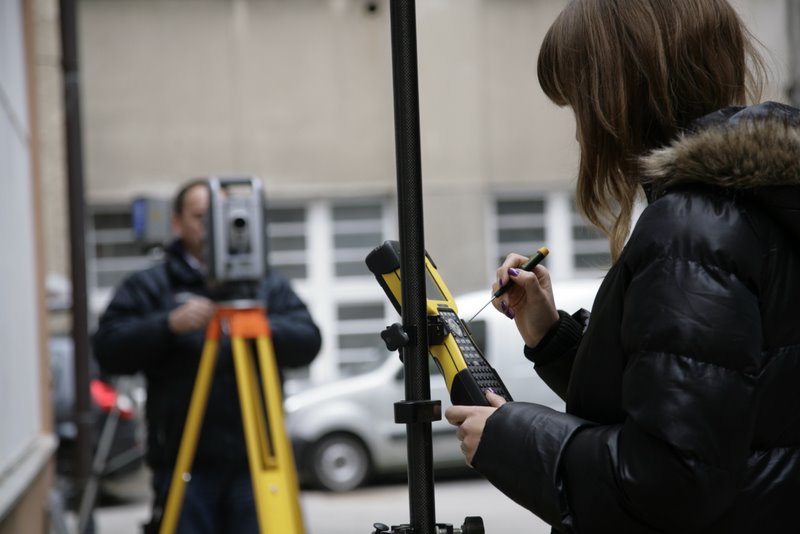
HR-10000 Zagreb, Croatia
Phone: + 385 1 46 39 222
Fax: + 385 1 48 28 081
E-mail: referada@geof.hr
FACTS & FIGURES
DEPARTMENTS: 3
CHAIRS: 14
TEACHING STAFF: 64
NON-TEACHING STAFF: 40
STUDENTS: 789
INTERNATIONAL RELATIONS
Professor Damir Medak, PhD
E-mail: damir.medak@geof.hr
Professor Tomislav Bašić, PhD
E-mail: tbasic@geof.hr
ECTS-COORDINATOR
E-mail: rzupan@geof.hr
INSTITUTIONAL PROFILE
The Faculty of Geodesy is the only institution in Croatia providing highest quality education, research, and expertise in fields of geodesy and geoinformation. Although education in geodesy officially started in 1919, it was 1962 when the Faculty of Geodesy emerged as an independent unit. Located in the same building with Faculty of Architecture and the Faculty of Civil Engineering, the Faculty of Geodesy has grown to more than 100 employees and about 8,00 undergraduate, graduate and postgraduate students.
During last 10 years, all teaching rooms and labs have been modernized and equipped with the latest measurement technology, including terrestrial laser scanners, automated total stations, the most recent GPS-receivers, precise echo-sounders, as well as appropriate software that has been deployed in both education and research. Cooperation with the public and private sector in Croatia is excellent. Students and teachers are exchanged with leading institutions in the region through CEEPUS and TEMPUS programmes.
PROGRAMME EMPHASIS
Teaching is organized according to the Bologna standard scheme: Bachelor of Geodesy and Geoinformatics encompasses 6 semesters – 3 years of study (180 ECTS), Master of Geodesy and Geoinformatics follows with 4 semesters – 2 years of study (120 ECTS). During the Bachelor stage, overall engineering education is provided: mathematics, physics, informatics, as well as the solid foundation in surveying and geoinformatics. Along with obligatory modules, there is a choice of elective subjects as well. At the Master’s level, students can choose between Geodesy, leaned to more complex modules related to advanced geodetic measurements and processing, marine, physical and satellite geodesy, and Geoinformatics, which emphasizes geoinformation science and technology, interoperability, photogrammetry and remote sensing, laser scanning and mobile GIS. The Master’s programme in Geoinformatics has recently been refurnished through a two-year TEMPUS grant which resulted in a major upgrade of equipment, software and books, but also improved the quality assurance, learning-outcome oriented teaching, problem-solving approach and other advanced topics.
CAREER PROSPECTS
Bachelors and Masters in Geodesy and Geoinformatics are competent to work both in the public sector (cadastre offices, local government) and in private enterprises (as chartered engineers or GIS experts). The job usually involves fieldwork and data processing in the office. Good communication and spatial skills as well as profound knowledge of surveying instruments and techniques as well as details about CAD, GIS software is necessary for a successful career. Currently, there are no graduates awaiting employment.
RESEARCH ORIENTATION
The Faculty of Geodesy performs research in the following fields: geodesy (photogrammetry and remote sensing, cartography, applied geodesy, marine, physical and satellite geodesy, and geomatics) and physics (physical astronomy). The research in physics is performed at Hvar Observatory. The researchers from the Faculty have a wide network of international contacts.
STUDY PROGRAMMES
UNDERGRADUATE STUDY PROGRAMME
|
BACHELOR’S STUDY PROGRAMME |
DURATION(semesters) |
ECTS |
LANGUAGUE OF INSTRUCTION |
|
Geodesy and Geoinformatics
|
6
|
180
|
Croatian
|
|
MASTER’S STUDY PROGRAMME |
DURATION
(semesters)
|
ECTS |
LANGUAGUE OF INSTRUCTION |
|
Geodesy and Geoinformatics
|
4
|
120
|
Croatian
|
|
DOCTORAL STUDY PROGRAMMES
|
DURATION
(semesters)
|
ECTS
|
LANGUAGE OF INSTRUCTION
|
|
Geodesy and Geoinformatics
|
6 |
180
|
Croatian
|
STUDY COURSES IN ENGLISH
|
COURSE TITLE |
SEMESTER Winter / Summer |
ECTS |
STUDY LEVEL BSc / MSc |
| Software Engineering in Geomatics | S | 6 | MSc |
|
Mobile Surveying and GIS
|
W |
6
|
MSc
|
| Risk Management | S |
6
|
MSc
|
|
Multimedia Cartography
|
S |
6
|
MSc
|
| Web-Cartography | S | 3 | BSc |
| Programming in GIS | W | 6 | MSc |
FACULTY OF GEOTECHNICAL ENGINEERING (VARAŽDIN)
http://www.gfv.hr/
University of Zagreb
Faculty of Geotechnical Engineering
Hallerova aleja 7
HR-42000 Varaždin, Croatia
Phone: + 385 42 40 89 00
Fax: + 385 42 31 35 87
E-mail: studentska.referada@gfv.hr
FACTS & FIGURES
DEPARTMENTS: 3
CHAIRS: 17
TEACHING STAFF: 32
NON-TEACHING STAFF: 28
STUDENTS: 262
INTERNATIONAL RELATIONS
Professor Ranko Biondić, PhD
E-mail: ranko.biondic@gfv.hr
Professor Zvjezdana Stančić, PhD
INSTITUTIONAL PROFILE
The Faculty of Geotechnical Engineering is one of two faculties of the University of Zagreb situated in the town of Varaždin. The Faculty offers three-year (six-semester) undergraduate study in the field of Geoengineering, which could be followed by two-year graduate study. Geoengineering is an interdisciplinary field of study that involves the application of geology and civil engineering principles to the problems connected with soil, water management, and environmental protection. Therefore, students can choose between the Geotechnical engineering module, Hydrotechnical engineering module, and Environmental engineering module.
The Faculty of Geotechnical Engineering has Bachelor programmes “Geoingineering” (180 ECTS) in the duration of three years which lead to the title “Bachelor of Geoengineering.” Students can choose between the Geotechnical Engineering Module, Hydrotechnical Engineering Module and Environmental Engineering Module. After graduation, the students can follow Master programmes in duration of two years, and can choose between the Geotechnical Engineering Module, Hydrotechnical Engineering Module, and Environmental Engineering Module. By successfully completing one of our Master’s programmes (300 ECTS ) they get the title “Master of Geoengineering.”
CAREER PROSPECTS
Students who have finished the Geotechnical Engineering module will be experts in the area of solving problems of soil and water pollution. Students who have finished the Hydrotechnical Engineering Module will be experts in the area of efficient protection and rational use of water resources. Students who have finished Environmental Engineering Module will be experts in the area of identification, prevention and mitigation of adverse impacts on the environment.
RESEARCH ORIENTATION
The main research fields are water resources, groundwater protection, geotechnical aspects of landfills and other environmental issues connected with soil and water. Practical and scientific research is conducted in the Geotechnical laboratory, the Laboratory of Environmental Geochemistry and the GIS lab where students gain practical experience necessary for their future profession.
|
BACHELOR’S STUDY PROGRAMMES |
DURATION(semesters) |
ECTS |
LANGUAGUE OF INSTRUCTION |
|
Geoengineering
|
6
|
180
|
Croatian
|
|
MASTER’S STUDY PROGRAMMES |
DURATION(semesters) |
ECTS |
LANGUAGUE OF INSTRUCTION |
| Geotechnical Engineering | 4 | 120 |
Croatian
|
| Hydrotechnical Engineering | 4 | 120 |
Croatian
|
|
Environmental Engineering
|
4
|
120
|
Croatian
|
FACULTY OF GRAPHIC ARTS
http://www.grf.hr/
University of Zagreb
Faculty of Graphic Arts
Getaldićeva 2, HR-10000 Zagreb, Croatia
Phone: +385 1 23 71 080
Fax: +385 1 23 71 077
E-mail: info@grf.hr
Web: www.grf.hr
FACTS & FIGURES
DEPARTMENTS: 19
CHAIRS: 19
TEACHING STAFF: 60
NON-TEACHING STAFF: 20
STUDENTS: 782
INTERNATIONAL RELATIONS
Ms Ivana Žganjar
E-mail: izganjar@grf.hr
ECTS-COORDINATOR
Professor Lidija Mandić, Phd
E-mail: lmandic@grf.hr
INSTITUTIONAL PROFILE
The Faculty of Graphic Arts (established 1990) belongs to the group of technical faculties. The main orientation of activities is as follows; digital printing, computing graphics, media science, design and communication technologies. The study programme stresses the need for a strong foundation in mathematics, physics, and chemistry, followed by a thorough coverage of the basics in printing technology, materials, and processes etc.
The Faculty of Graphic Arts has traditionally worked in the field of graphic engineering, but its field of work continues to expand to creative industries and communications including media, marketing, publishing, and design of a graphic product.
PROGRAMME EMPHASIS
The Bachelor’s study programme (6 semeters, 180 ECTS) offers a choice between Technical Technological or Design of Graphic Products orientation. The study consists of courses like mathematics, physics, chemistry, information science, engineering graphics, photographic processes, and technical image processing systems as well as the arts and the theory of forms. Further, students expand their knowledge of printing materials, graphic technology and typography, packaging and product finishing, as well as multimedia communications.
The Master’s study programme (4 semeters, 120 ECTS) in printing technology is orientated to the printing industry such as leading and designing multimedia systems, managing of projects bound to packaging, publishing and graphic communications, graphic designs and general solutions of the visual identity.
The Doctoral study in Graphic Engineering and Graphic Design (6 semeters, 180 ECTS) offers scientific research in the areas of creation and transfer of data in printed media, as well as in other types of visual communication.
CAREER PROSPECTS
A graduate from the Faculty of Graphic Arts is entitled to use the legally protected academic title: Bachelor of Engineering, Graphic Technology or Engineer of Graphic Technology – Designer. He/she is qualified for the jobs necessary to lead graphic production independently, to manage the quality of this production, to perform the technological preparation of the printing and packaging production process, paper industry, graphic design, etc.
RESEARCH ORIENTATION
Some of the topics covered by the wide spread research area are: securities and documents graphics, innovative graphic materials and new formulations, different kind of improvements in graphic processes in relation to the environment, design and technological factors, developments of new measuring methods, cultural heritage protection, and media communication.
STUDY PROGRAMMES
UNDERGRADUATE STUDY PROGRAMMES
|
BACHELOR’S STUDY PROGRAMMES |
DURATION(semesters) |
ECTS |
LANGUAGUE OF INSTRUCTION |
| Printing Technology - Technical Technological | 6 | 180 |
Croatian
|
|
Printing Technology - Design of Graphic Products
|
6
|
180
|
Croatian
|
|
MASTER’S STUDY PROGRAMMES |
DURATION(semesters) |
ECTS |
LANGUAGUE OF INSTRUCTION |
| Printing Technology | 4 | 120 |
Croatian
|
| Multimedia | 4 | 120 |
Croatian
|
| Publishing | 4 | 120 |
Croatian
|
| Packaging | 4 | 120 |
Croatian
|
|
Printing Technology - Design of Graphic Products
|
4
|
120
|
Croatian
|
|
DOCTORAL STUDY PROGRAMMES
|
DURATION
(semesters)
|
ECTS
|
LANGUAGE OF INSTRUCTION
|
|
Graphic engineering and Design of Graphic Products
|
6 |
180
|
Croatian
|
STUDY COURSES IN ENGLISH
|
COURSE TITLE
|
SEMESTER Winter / Summer |
ECTS |
STUDY LEVEL BSc / MSc |
| Motion Graphics | W | 6 | MSc |
|
Functional Printing Applications
|
S |
4
|
BSc
|
| Selected Chapters in Quality Management | W |
5
|
MSc
|
|
The History of Printing
|
W | 4 |
MSc
|
| Optical methods in printed media research | S | 4 | MSc |
| Paper making and Characterisation of Paper materials | S | 4 | BSc |
| Colour in digital environment | S | 3 | MSc |
| Communication Science* | W | 4 | BSc |
| Visual Communication* | S | 4 | BSc |
| Communication in Graphic Design* | W | 6 | MSc |
| Media Communication* | S | 6 | MSc |
| Business Communication* | W | 6 | MSc |
| Quality Management in Printing | 4 |
* Tutorial Classes
FACULTY OF MECHANICAL ENGINEERING AND NAVAL ARCHITECTURE
http://www.fsb.hr/
University of Zagreb
Faculty of Mechanical Engineering and Naval Architecture
Ivana Lučića 5
HR-10000 Zagreb, Croatia
Phone: + 385 1 61 68 222
Fax: + 385 1 61 56 940
E-mail: stuslu@fsb.hr
FACTS & FIGURES 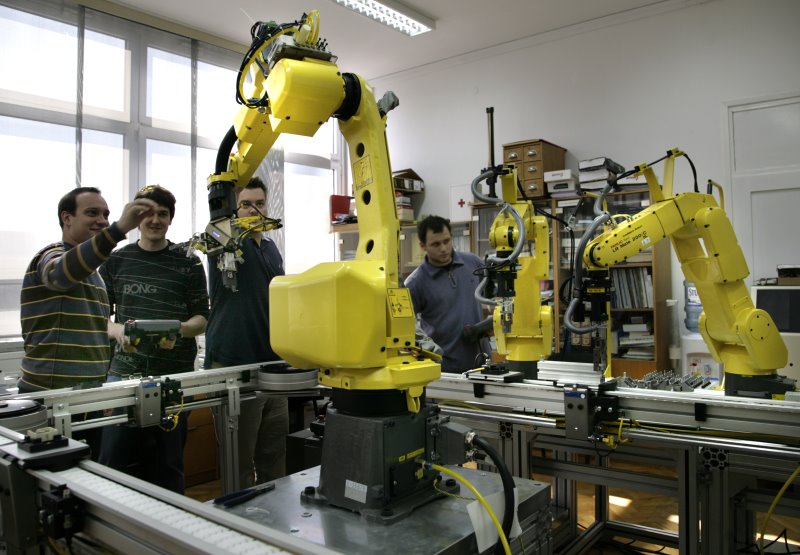
DEPARTMENTS: 13
CHAIRS: 40
TEACHING STAFF: 244
NON-TEACHING STAFF: 180
STUDENTS: 2259
E-mail: zdravko.virag@fsb.hr
Professor Dragan Žeželj, PhD
Telefon: +385 1 61 68 359
E-mail: dragan.zezelj@fsb.hr
The Faculty is the oldest and biggest faculty of mechanical engineering, naval architecture and aeronautical engineering in Croatia. Since1919, when the first courses were organized at the Royal Technical College, the studies in mechanical engineering and naval architecture at the University of Zagreb have always been modern due to a successful synthesis of general and expert knowledge in the four fields: design, materials, production, and organization. The study programmes and contents of courses make the curriculum of the Faculty comparable with the curricula of similar faculties of leading European universities, thus enabling the Faculty to be ranked highly among the leading technical faculties of the University of Zagreb and in Croatia.
The main research fields are engineering design, materials, new technologies, new manufacturing processes and engineering, maintenance and tribology, transport systems (land, sea and air), and offshore engineering.
The programme stresses a strong foundation in mathematics, technical physics and materials, followed by a thorough coverage of basic engineering such as fluid mechanics, thermodynamics, mass and heat transfer, structural mechanics. Specialized courses offer many specializations in all three fields.
Mechanical engineers generally work in the production industry as product designers, production leaders and organizers, quality managers, researchers, etc. Naval Architects are oriented towards shipyard work in a design office, construction, ship production and outfitting, in ship owner offices, classification societies and survey, research, regulatory bodies, etc. Aeronautical engineers find work in air companies for maintenance and refit of aircraft, air force, state regulatory bodies.
|
BACHELOR’S STUDY PROGRAMS |
DURATION(semesters) |
ECTS |
LANGUAGE OF INSTRUCTION |
| Mechanical Engineering | 7 |
210
|
Croatian
|
| Naval Architecture | 7 |
210
|
Croatian
|
|
Aeronautical Engineering
|
7
|
210
|
Croatian
|
|
MASTER’S STUDY PROGRAMS |
DURATION (semesters) |
ECTS |
LANGUAGE OF INSTRUCTION |
|
Mechanical Engineering
|
3 | 90 |
Croatian
|
| Naval Architecture | 3 | 90 |
Croatian
|
|
Aeronautical Engineering
|
3
|
90
|
Croatian
|
|
DOCTORAL STUDY PROGRAMMES
|
DURATION
(semesters)
|
ECTS
|
LANGUAGE OF INSTRUCTION
|
|
Engineering and Naval Architecture
|
6 |
180
|
Croatian
|
STUDY COURSES IN ENGLISH
The FAculty offers a number of courses in English. For a detailed information please visit the FSB website.
FACULTY OF MINIG, GEOLOGY AND PETROLEUM ENGINEERING
http://www.rgn.unizg.hr/
University of Zagreb
Faculty of Mining, Geology, and Petroleum Engineering
Pierottijeva 6
HR-10000 Zagreb, Croatia
Phone: +385 1 55 35 702
Fax: +385 1 48 36 053
E-mail: dekanat@rgn.hr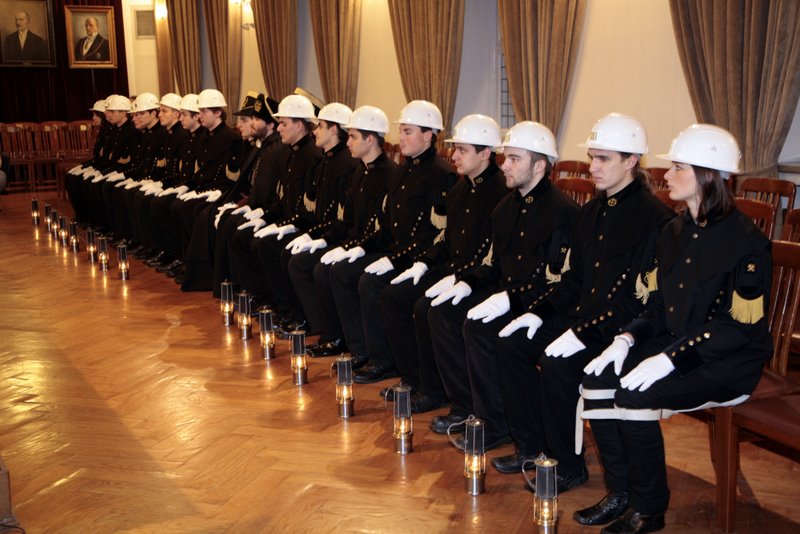
FACTS & FIGURES
DEPARTMENTS: 7
CHAIRS: 1
TEACHING STAFF: 95
NON-TEACHING STAFF: 55
STUDENTS: 904
INTERNATIONAL RELATIONS
Ms Željka Kurelec
E-mail: zeljka.kurelec@rgn.hr
Professor Igor Vlahović, PhD
E-mail: igor.vlahovic@rgn.hr
ECTS-COORDINATOR
Professor Sibila Borojević Šoštarić, PhD
INSTITUTIONAL PROFILE
The Faculty of Mining, Geology, and Petroleum Engineering of the University of Zagreb is among the leading engineering faculties in Croatia, with approximately 800 undergraduates and 100 postgraduates. It developed from the Chair and the Department of Mineralogy and Geology, which was active from the very beginning as a part of the Royal Technical College, established in 1918.
The Faculty educates experts in the area of technical sciences as well as in the area of natural sciences. It develops both areas educationally, scientifically and professionally. It also cooperates with the largest domestic companies as well as with similar institutions abroad, in Bosnia and Herzegovina, Austria, the Czech Republic, Denmark, Germany, Hungary, Italy, Japan, Norway, Poland, Romania, the United States, Slovakia, and Slovenia.
RESEARCH ORIENTATION
The main research projects are in the field of technical sciences – mining engineering, geological engineering and petroleum engineering, and in the field of natural sciences within geosciences – geology of mineral resources and exploration geophysics.
The Faculty coordinates or participates in national projects financed by the Ministry of Science, Education and Sports of the Republic of Croatia (23 in 2012) and in a number of bilateral and multilateral international projects within different frameworks (9 in 2012).
PROGRAMME EMPHASIS
The programme stresses the need for a strong foundation in Mathematics and Physics, followed by a thorough coverage of basic engineering such as Mechanics, as well as Soil, Rock and Fluid Mechanics, Thermodynamics and Applied Geology, Mineralogy, Geophysics and Geodesy.
In the later years students are given specialised courses in various disciplines of geotechnology (mining and petroleum engineering) or applied geosciences (geology and geological engineering). In this way, graduate students have the opportunity to choose the specialisation in one of the areas defined by nine graduate study courses.
Field work is an important form of studying at the Faculty. The chosen sites are situated in Croatia as well as abroad, on land and at sea, on the surface and under it.
The postgraduate doctoral programme of mining, petroleum engineering, geology and geological engineering includes courses during the first year and research, laboratory work and tutorials during the second and third years. Part-time students are accepted in the programme but with the doubled duration of study.
CAREER PROSPECTS
Mining engineers generally work in companies dealing with mining or geotechnical operations, water works, blasting activities or land reclamation procedures. Geology graduates will find employment in exploration companies, consultancies or laboratories, also in the geophysical exploration and drilling activities and in the local administration, nature reserves and national parks. Geological engineers will perform engineering-geological exploration and hydrogeology-related research in the communal and public companies and in the private sector as well. Petroleum engineers will find employment in all types of activities connected to the exploration, production, transport and storage of oil and gas, deep drilling, energy production and distribution, as well as in the management of fossil fuels resources.
|
BACHELOR’S STUDY PROGRAMMES |
DURATION(semesters) |
ECTS |
LANGUAGUE OF INSTRUCTION |
| Mining Engineering | 6 | 180 |
Croatian
|
| Geological Engineering | 6 | 180 |
Croatian
|
|
Petroleum Engineering
|
6
|
180
|
Croatian
|
|
MASTER’S STUDY PROGRAMMES |
DURATION(semesters) |
ECTS |
LANGUAGUE OF INSTRUCTION |
| Mining Engineering | 4 | 120 |
Croatian
|
| Geology | 4 | 120 |
Croatian
|
| Geological Engineering | 4 | 120 |
Croatian
|
|
Petroleum Engineering
|
4
|
120
|
Croatian
|
|
DOCTORAL STUDY PROGRAMMES
|
DURATION
(semesters)
|
ECTS
|
LANGUAGE OF INSTRUCTION
|
|
Mining, Geology and Petroleum engineering
|
6 |
180
|
Croatian
|
|
COURSE TITLE |
SEMESTER Winter / Summer |
ECTS |
STUDY LEVEL BSc / MSc |
| Municipal Solid Waste Landfills | W | 3 |
MSc
|
|
Exploration Geochemistry
|
W | 3 |
MSc
|
| Energy Markets | W | 4 | MSc |
Faculty of Textile Technology
Prilaz baruna Filipovića 28a
HR-10000 Zagreb, Croatia
Phone: +385 1 37 12 512
Fax: +385 1 37 12 599
E-mail: fakultet@ttf.hr
FACTS & FIGURES
DEPARTMENTS: 7
TEACHING STAFF: 93
NON-TEACHING STAFF: 44
STUDENTS: 951
INTERNATIONAL RELATIONS
Professor Ana Marija Grancarić, PhD
E-mail: amgranca@ttf.hr
ECTS-COORDINATOR
Professor Gordana Pavlović, PhD
E-mail: gpavlov@ttf.hr ; iroffice@ttf.hr
INSTITUTIONAL PROFILE
The Faculty of Textile Technology was founded in 1991 as an independent university unit. It became the only higher education institution in the field of textile technology in Croatia.
Today, the Faculty is not only the strongest higher education institution of its kind in Croatia, but also one of the leading faculties of this type in Europe, and its diplomas are internationally acknowledged by AUTEX (Association of Universities for Textiles) and Textile Institute Manchester (GB) for the region of Commonwealth and the USA.
PROGRAMME EMPHASIS
The study programmes are based on contemporary scientific know-how in textile and footwear technologies, as well as the newest developments and trends in global fashion design. The importance of confirming and preserving the authentic Croatian fashion is also integrated into the programmes. The programmes have been made having in mind that the textile industry has been increasingly automated, new fibres and materials have been introduced in the manufacture, and nano-technological innovations have also been implemented.
CAREER PROSPECTS
Textile Technology and Engineering enable students to fit into any manufacturing phase in a company. They are able to organize and directly manage particular manufacturing processes in the part of textiles included into their specialisation. In manufacturing plants, they can work at a wide range of jobs, from technologists to managers of particular manufacturing phases. They can also start their own smaller businesses, be employed by agencies, merchant houses, as well as in secondary schools, as teachers of practical instruction. The branch of Textile and Clothing Design for Industry unites basic engineering knowledge and skills in textile technologies with the education in fine arts. The students should be able to include the artistic/creative component of their knowledge into the processes of manufacturing fabrics and then be able to express creativity developed throughout the course, while applied design-based education makes them able to notice and follow global fashion trends and transform them into original and recognisable designs. The labour market has successfully absorbed almost all of the fashion designers educated at the Faculty of Textile Technology.
RESEARCH ORIENTATION
The research work is based on the subjects of textile-mechanical technology, material science, textile chemistry and technology, and clothing technology. Based on fruitful research work faculty academic staff are involved in numerous projects, 16 national research projects, 2 FP7 projects, 4 EUREKA, 5 technological projects, 11 bilateral projects, and many others.
|
BACHELOR’S STUDY PROGRAMMES |
DURATION(semesters) |
ECTS |
LANGUAGUE OF INSTRUCTION |
|
Textile Technology and Engineering
- Engineering Design and
Management of Textiles
- Textile Chemistry, Materials
and Ecology
- Clothing Engineering - Textile and Clothing Design
for industry
|
6
|
180
|
Croatian
|
|
Textile Design
|
6 | 180 |
Croatian
|
| Fashion Design | 6 | 180 |
Croatian
|
|
MASTER’S STUDY PROGRAMMES |
DURATION(semesters) |
ECTS |
LANGUAGUE OF INSTRUCTION |
|
Textile Technology and Engineering
- Engineering Design and
Management of Textiles
- Textile Chemistry,
Materials and Ecology
- Clothing Engineering - Textile Design for Industry - Clothing Design for
Industry
|
4
|
120
|
Croatian
|
| Textile Design | 4 | 120 |
Croatian
|
| Costume Design | 4 | 120 |
Croatian
|
| Theory and Culture of Fashion | 4 | 120 |
Croatian
|
| Textile Design | 4 | 120 |
Croatian
|
|
Fashion Design
|
4 | 120 |
Croatian
|
|
DOCTORAL STUDY PROGRAMMES
|
DURATION
(semesters)
|
ECTS
|
LANGUAGE OF INSTRUCTION
|
|
Textile Science and Technology
|
6 |
180
|
Croatian
|
| Fashion Theory and Design of the body | 6 |
180
|
Croatian
|
STUDY COURSES IN ENGLISH
|
COURSE TITLE |
SEMESTER Winter / Summer |
ECTS |
STUDY LEVEL BSc / MSc |
| Textile Pretreatment and Finishing | S | 5 | BSc |
| Seawability of Knitted Fabrics | S | 5 | BSc |
| Colour and Trademark | S | 4 | BSc |
| Spun Yarn Engineering | S | 4 | BSc |
| Fibers I | S | 7 | BSc |
| Fibers II | W | 7 | BSc/MSc |
| Restoration and conservation of textiles and clothing | S/W | 3 | MSc |
| Testing of Textiles and Clothes | S | 5 | BSc |
| Technical Textiles | W | 6 | MSc |
| Textile Quality and Testing | W | 6 | MSc |
Faculty of Transport and Traffic Sciences
Vukelićeva 4
HR-10000 Zagreb, Croatia
Phone: + 385 1 23 80 222
Fax: + 385 1 23 14 415
E-mail: fpz@fpz.hr
FACTS & FIGURES
DEPARTMENTS: 13
CHAIRS: 28
TEACHING STAFF: 119
NON-TEACHING STAFF: 61
CONTACT PERSONS FOR INTERNATIONAL RELATIONS
Mr Nikola Bakarić
Faculty of Transport and Traffic Sciences, established in 1984, is a faculty of the University of Zagreb, and the leading high education as well as scientific and research institution in the field of transport and traffic engineering in Croatia. Faculty staff participates in national, regional and international scientific, research and development projects funded by the national Ministry of Science, Education and Sports, the European Commission and international institutions. The faculty also participates in public and commercial projects solving transport and traffic problems of transportation sectors in Croatia. International co-operation through exchange of academic staff and students presents an important part of academic and research activities.
PROGRAMME EMPHASIS
Faculty of Transport and Traffic Sciences offers programmes in Traffic and Transport, Intelligent Transport Systems and Logistics and Aeronautics. Programme of Traffic and Transport involves courses in Road, Railway, Urban, Air, Waterway, Postal, and Information and Communication Transport and Traffic. All the programmes are taught at the three-year undergraduate (180 ECTS) and two-year graduate levels (120 ECTS).
Postgraduate studies provide three-year Doctoral Studies in the field of Transport and Traffic Engineering, as well as one-year Specialist Studies in Urban Transport and Traffic, Inter-modal Transport and Traffic, and Transport Logistics and Management.
Transport and traffic engineers generally work in companies and other transport institutions dealing with various transport modes and/or traffic technology, logistics, and management. The job may involve planning, design, operation, supervision, and maintenance of transport and traffic facilities and processes.
RESEARCH ORIENTATION
The research carried out is of a high international standard and has the goal of providing modern transport and traffic technology, infrastructure, logistics and Intelligent Transport Systems solutions in road, waterway, postal, information and communication, urban, air and railway transport.
|
BACHELOR’S STUDY PROGRAMMES |
DURATION(semesters) |
ECTS |
LANGUAGUE OF INSTRUCTION |
|
Traffic and Transport
- Air
- Information and Communication
- Postal
- Railway
- Road
- Urban
- Waterway
|
6
|
180
|
Croatian
|
|
Intelligent Transport Systems and Logistics
- Intelligent Transport Systems
- Logistics |
6 | 180 |
Croatian
|
|
Aeronautics
- Air Traffic Control |
6 | 180 |
Croatian
|
|
MASTER’S STUDY PROGRAMMES |
DURATION(semesters) |
ECTS |
LANGUAGUE OF INSTRUCTION |
|
Traffic and Transport
- Air
- Information and Communication
- Postal
- Railway
- Road
- Urban
- Waterway
|
4
|
120
|
Croatian
|
|
Intelligent Transport Systems and Logistics
- Intelligent Transport Systems
- Logistics |
4 | 120 |
Croatian
|
|
Aeronautics
- Air Traffic Control |
4 | 120 |
Croatian
|
|
DOCTORAL STUDY PROGRAMMES
|
DURATION
(semesters)
|
ECTS
|
LANGUAGE OF INSTRUCTION
|
|
Technological Systems in Traffic and Transport
|
6 |
180
|
Croatian
|
|
STUDY COURSES IN ENGLISH |
SEMESTER Winter / Summer |
ECTS |
STUDY LEVEL BSc / MSc |
| Fundamentals of Intelligent Transportation Systems* | S | 7 |
MSc
|
|
Water Transportation Planning*
|
S |
7
|
MSc
|
| Quality Management* | W |
6
|
MSc
|
|
Logistics and transportation models*
|
W | 5 |
MSc
|
| Reverse logistics* | W | 4 |
MSc
|
| Railway Intelligent Transportation Systems* | S | 5 |
MSc
|
| Inventory Management* | S | 6 | BSc |
| Fundamentals of Intelligent Transportation Systems* | S | 7 | MSc |
| Integral and Intermodal Transport* | W | 4 | MSc |
| Transport Optimization* | W | 5 | BSc, MSc |
| Warehouse Transport and Storage* | W | 6 | MSc |
| Aircraft Instruments and Electrical Systems I* | W | 2 | MSc |
| Theory of Air Traffic Control I* | W | 5 | BSc |
| Evaluation of Road Projects* | S | 5 | MSc |
| Radio-telephony Communications* | W | 2 | BSc |
| Railway Transport Computer Modelling* | W | 5 | MSc |
FACULTY OF METALLURGY (SISAK)
http://www.simet.unizg.hr/
University of Zagreb
Faculty of Metallurgy
Aleja narodnih heroja 3
HR-44000 Sisak, Croatia
Phone: ++ 385 44 53 33 79
Fax: ++ 385 44 53 33 78
E-mail: dekanat@simet.hr
FACTS & FIGURES
DEPARTMENTS: 3
CHAIRS: 1
TEACHING STAFF: 31
NON-TEACHING STAFF: 11
STUDENTS: 145
INTERNATIONAL RELATIONS
Professor Jadranka Malina, PhD
E-mail: malina@simet.hr
ECTS-COORDINATOR
Professor Damir Hršak, PhD
E-mail: hrsak@simet.hr
INSTITUTIONAL PROFILE
The Faculty of Metallurgy, situated in the town of Sisak, is the only institution of its kind for education of metallurgical professionals in the Republic of Croatia. As an academic institution for education and training of students of metallurgy, the Faculty has been active for more than 50 years and during that time the academic degree of graduate engineer in metallurgy has been granted to 472 students, the title of engineer in metallurgy to 66 students, 29 bachelors, 51 graduates have acquired a Master’s of Science degree and 32 a doctoral degree.
The activities of the Faculty of Metallurgy encompass the organization of scientific and professional symposia and conferences, and publication of books, manuals, and mimeographed course materials, as well as of papers and professional articles in journals and congress proceedings.
PROGRAMME EMPHASIS
The study programmes of the Faculty of Metallurgy have been defined to comply with those of other higher education institutions in Europe, in accordance with the Bologna process. There are two courses of undergraduate study – Metallurgical Engineering and Industrial Ecology. The number of applicants for the undergraduate course of study in Metallurgy is limited to fifty. The course lasts for three years, and upon completion the student acquires the academic title of Baccalaureus or Baccalaurea in Metallurgy. The graduate course of study which takes another two years (optional modules: Process Metallurgy, Metal Processing and Metal Casting) entitles the student to the degree of Master of Metallurgy. Upon completion of the postgraduate course of study the student is awarded the academic degree of Doctor of Science in the field of Metallurgy. Since two years, Faculty performs professional study Founding.
CAREER PROSPECTS
Graduates in Metallurgy are given a choice of job opportunities at the domestic and European markets: in the metallurgical (ironworks, rolling plants, casting shops) and metalworking industries, in shipbuilding, in departments and laboratories for quality assessment and quality control of metal materials, in metal welding and heat treatment services, in scientific, professional and educational institutions, governmental agencies and local administrative bodies (county and municipal offices), etc.
RESEARCH ORIENTATION
The work of the Faculty of Metallurgy is organized in three departments that comprise seven laboratories and a chair in mathematics and informatics. The activities of the Faculty of Metallurgy focus on education of professionals in the field of metallurgy, and on scientific and professional research in metallurgy and related fields (iron, steel, casting, hydrometallurgy, chemistry, ecology, electrometallurgy, metal deformation processing, thermal processing and mechanical engineering, physics and structure analysis, materials development and applications etc.).
STUDY PROGRAMMES
|
BACHELOR’S STUDY PROGRAMMES |
DURATION(semesters) |
ECTS |
LANGUAGUE OF INSTRUCTION |
| Metallurgy |
6
|
180
|
Croatian
|
|
MASTER’S STUDY PROGRAMMES |
DURATION(semesters) |
ECTS |
LANGUAGUE OF INSTRUCTION |
|
Metallurgy
|
4
|
120
|
Croatian
|
|
DOCTORAL STUDY PROGRAMMES
|
DURATION
(semesters)
|
ECTS
|
LANGUAGE OF INSTRUCTION
|
|
Metallurgy
|
6 |
180
|
Croatian
|
|
COURSE TITLE |
SEMESTER Winter / Summer |
ECTS |
STUDY LEVEL BSc / MSc |
|
Fundamentals of Metal Casting |
S |
5 |
BSc |
|
Nonferrous metals Casting |
S |
5 |
BSc |
|
Theory of Metal Casting |
W |
5 |
MSc |
|
Hydrometallurgy |
W |
4 |
BSc |